As a video production agency, clients can take for granted our knowledge of marketing. The nature of our business allows us we encounter various marketing strategies and techniques from all our clients who operate across multiple sectors and countries. Here are nine useful marketing rules we'd like to share.
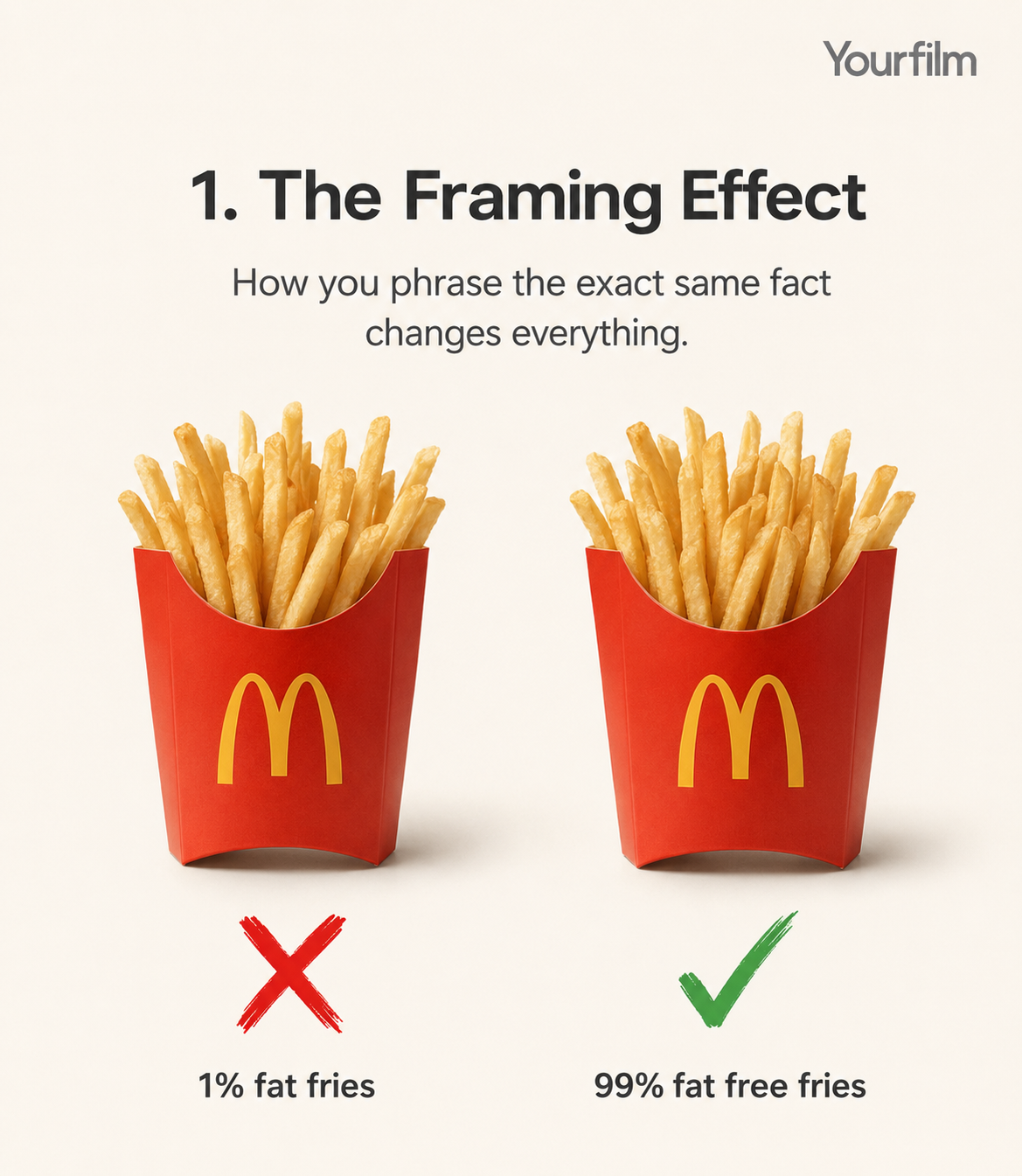
1. The Framing Effect
People don’t just respond to facts – they respond to how those facts are presented.
A classic example is describing something as “99% fat free” instead of “1% fat“. Both statements mean exactly the same thing, but one feels far more positive than the other.
The same principle applies across almost every industry. Whether you’re selling software, property, financial services or retail products, carefully choosing how you present information can dramatically change how customers perceive value.
The lesson? The facts matter, but the way you frame them matters just as much.
2. The Affordability Illusion
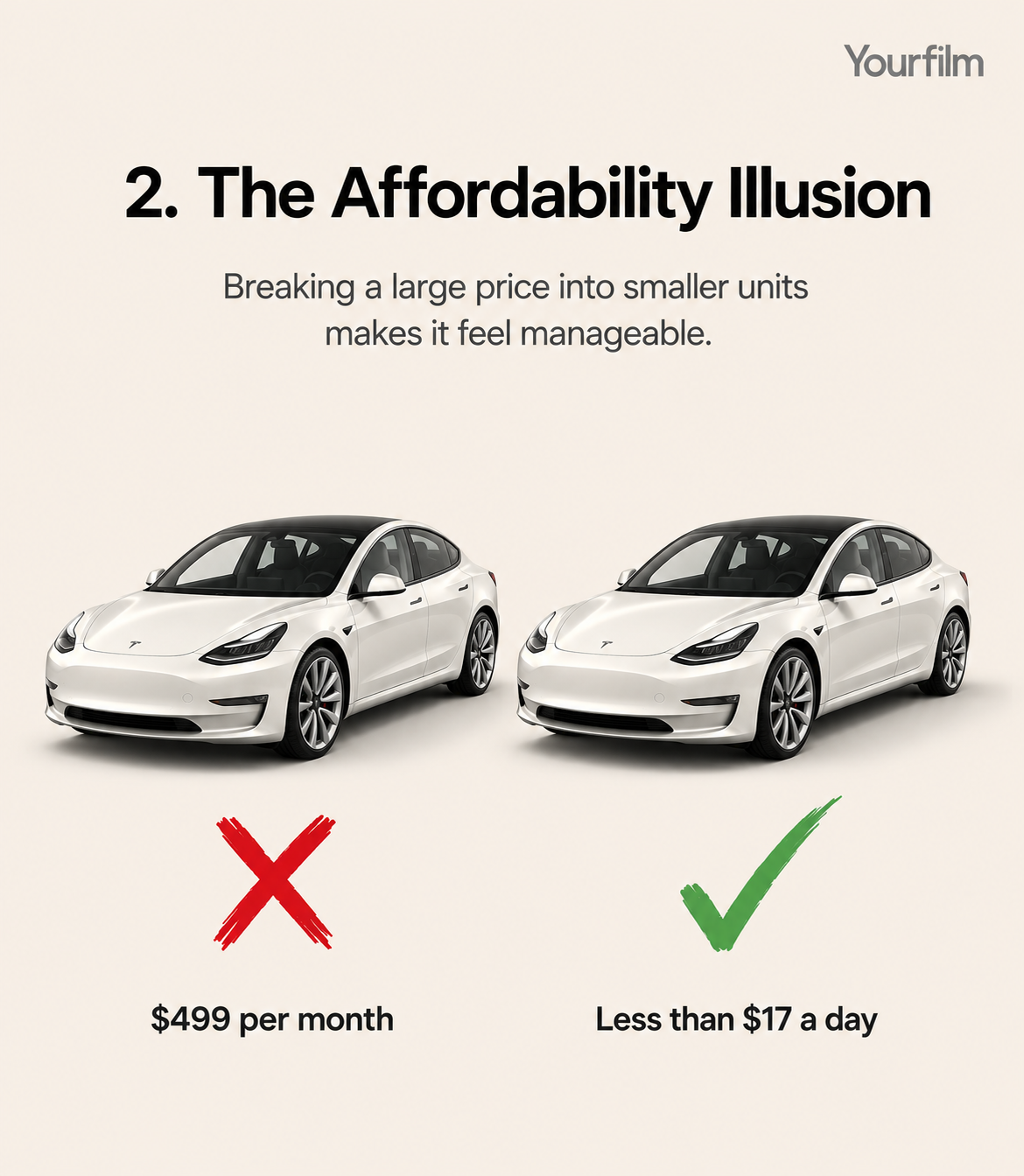
Large numbers can create unnecessary resistance.
Quoting a product at £499 per month may feel expensive, but breaking it down into less than £17 a day makes it feel much more manageable—even though the total cost hasn’t changed.
People naturally compare prices against what feels familiar in everyday life. That’s why monthly, weekly or daily pricing often performs better than presenting one large figure upfront.
It’s not about hiding the cost—it’s about making it easier for customers to process.
3. Anchoring Bias
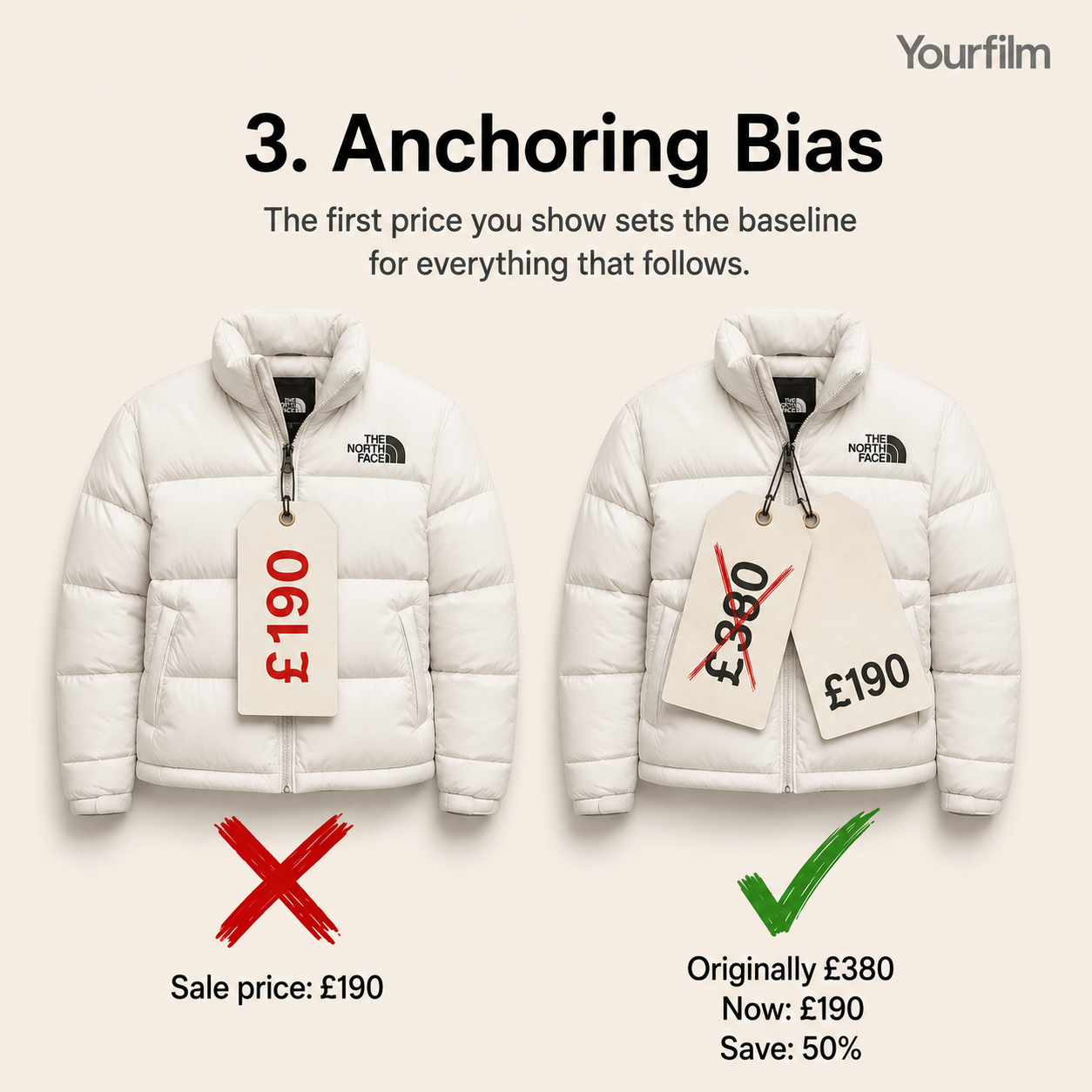
The first price someone sees becomes their reference point.
If a jacket is simply listed at £190, it may seem expensive. But if customers first see it priced at £380, then reduced to £190, the exact same price suddenly feels like a bargain.
This initial reference point is known as an anchor, and it heavily influences how we judge value.
Anchoring is one of the simplest and most effective pricing techniques used across retail, hospitality and e-commerce.
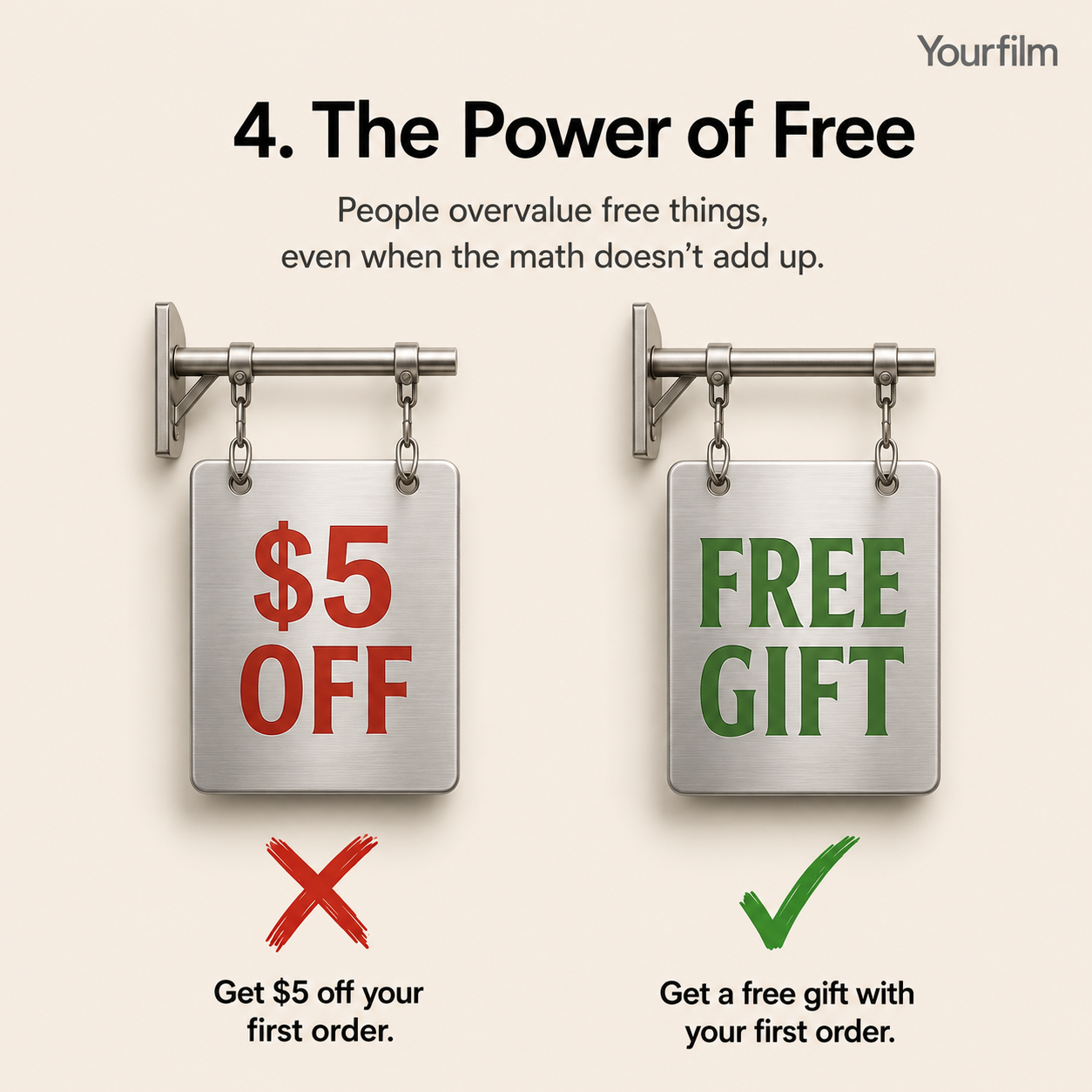
4. The Power of Free
There’s something incredibly persuasive about the word free.
Offering £5 off may technically provide more value than a low-cost free gift, but many customers will still choose the free gift simply because “free” carries a stronger emotional pull.
We’re naturally wired to overvalue anything that appears to have no downside.
Used correctly, free trials, complimentary gifts and bonus extras can significantly increase conversions without dramatically increasing costs.
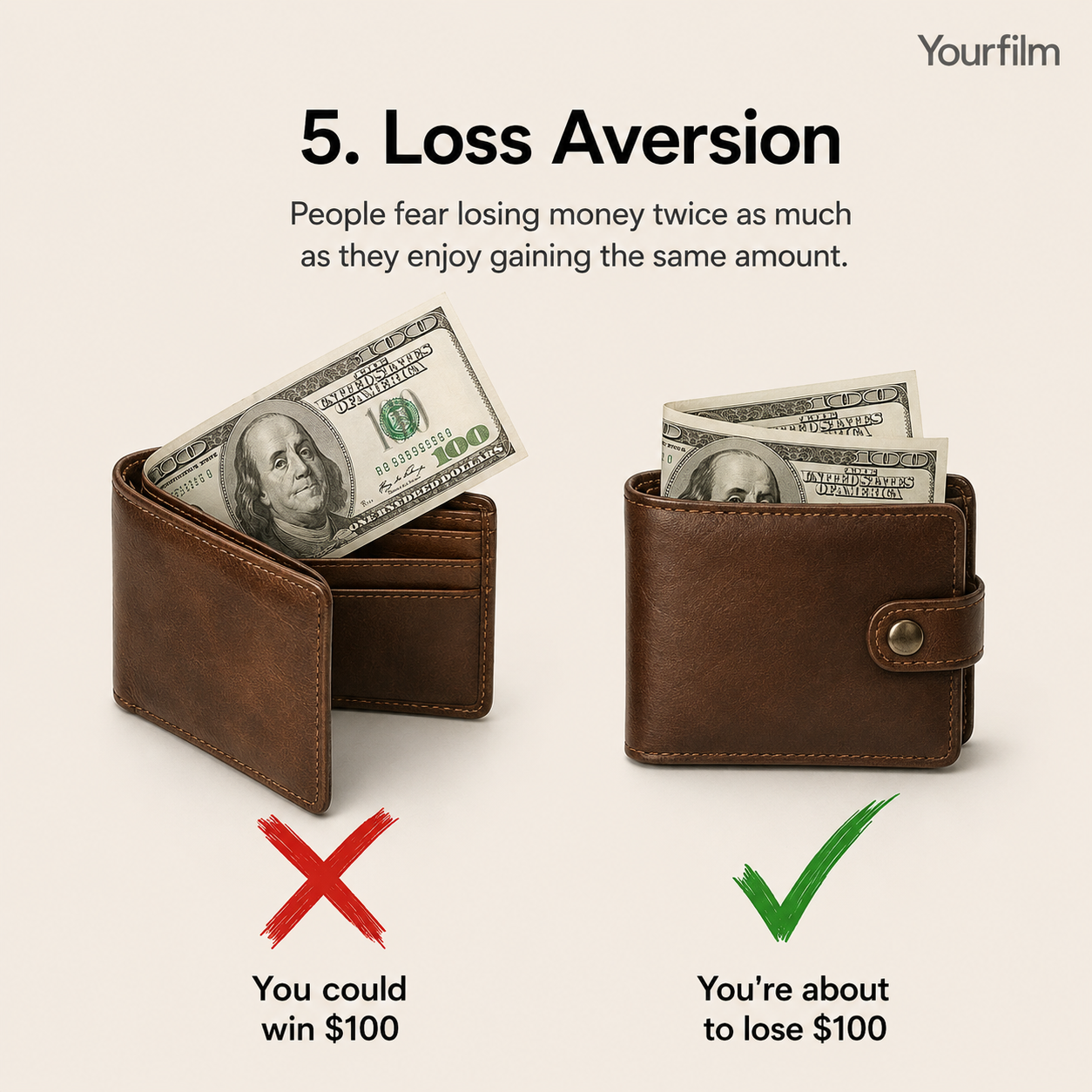
5. Loss Aversion
Psychologists have found that people feel the pain of losing something much more strongly than the pleasure of gaining the same thing.
Telling someone they could win £100 is appealing.
Telling them they’re about to lose £100 is far more motivating.
That’s why messages built around avoiding mistakes, preventing losses or missing opportunities often outperform messages focused purely on potential gains.
People generally act faster to avoid losing than they do to achieve winning.
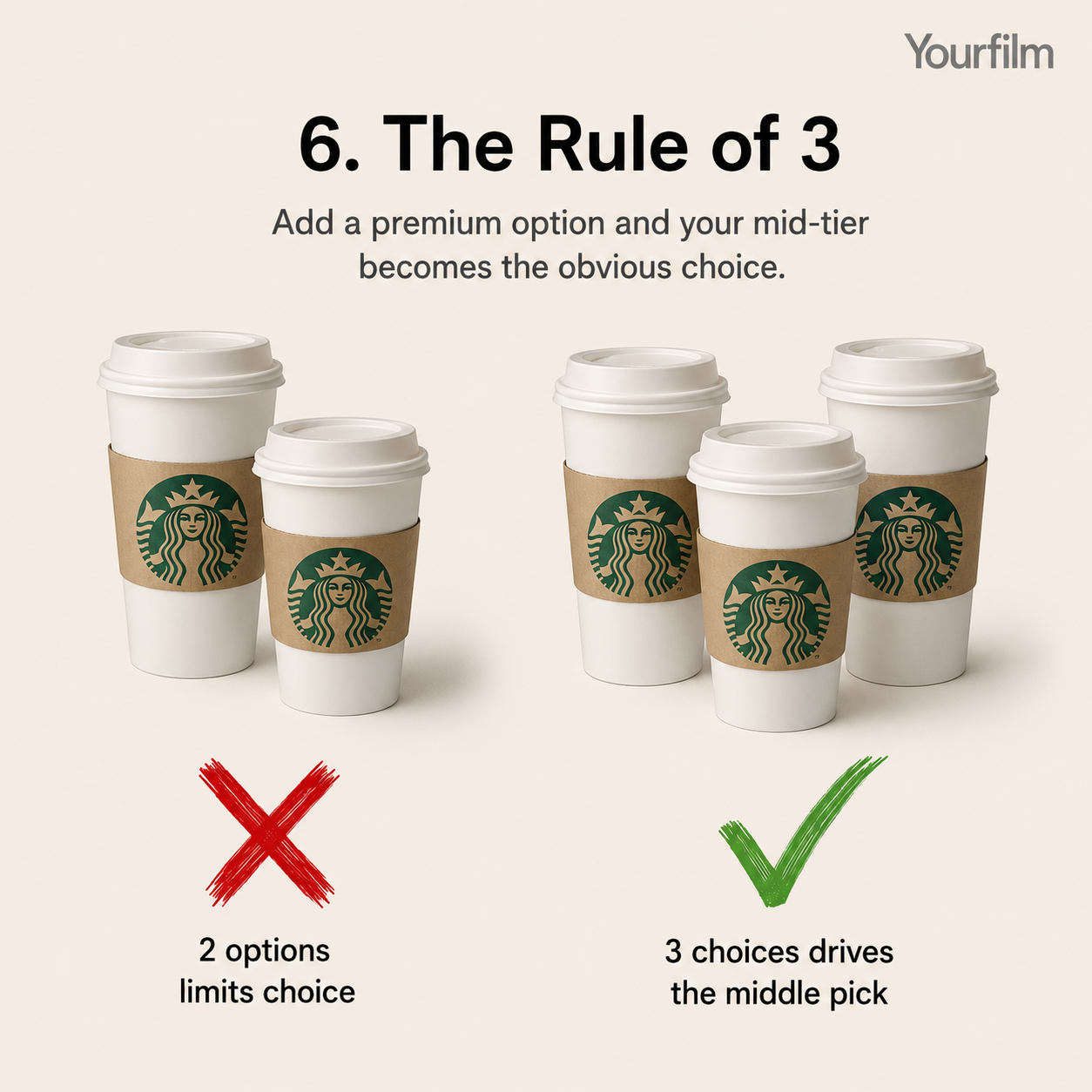
6. The Rule of Three
Too many choices can make decisions harder.
When customers are presented with just two options, the decision often becomes a simple comparison. Introduce a carefully positioned premium option, however, and the middle option suddenly becomes the obvious choice.
This is why so many pricing pages feature three packages.
The highest-priced option isn’t always there because it’s expected to sell the most—it often exists to make the middle option feel like the best value.
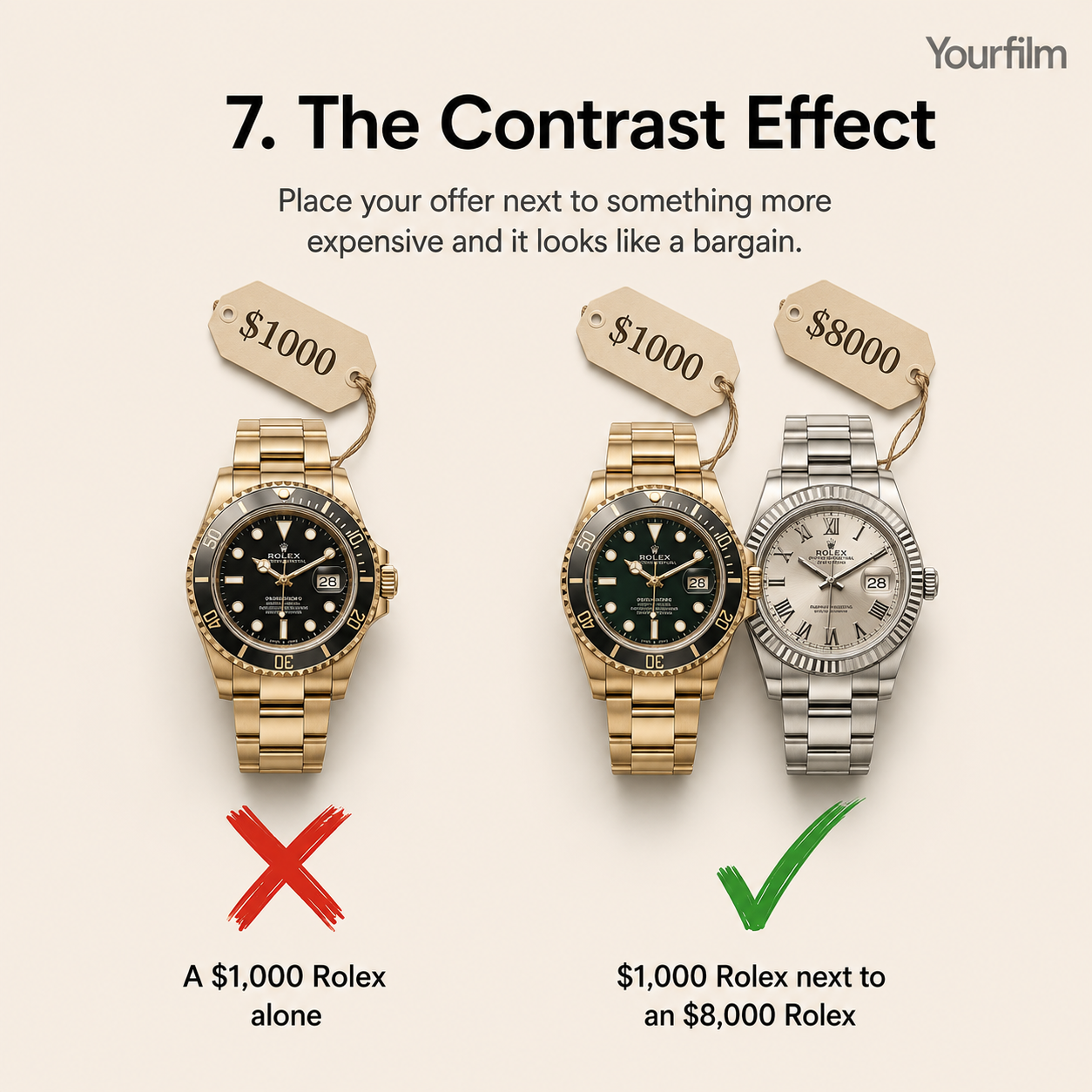
7. The Contrast Effect
Value is relative.
A £1,000 watch might seem expensive on its own.
Place it next to an £8,000 watch, and suddenly it feels much more affordable.
Customers rarely judge products in isolation. Instead, they compare what’s directly in front of them.
Whether you’re creating a pricing page, preparing a proposal or designing a product catalogue, carefully choosing what sits alongside your offer can have a significant impact on how it’s perceived.
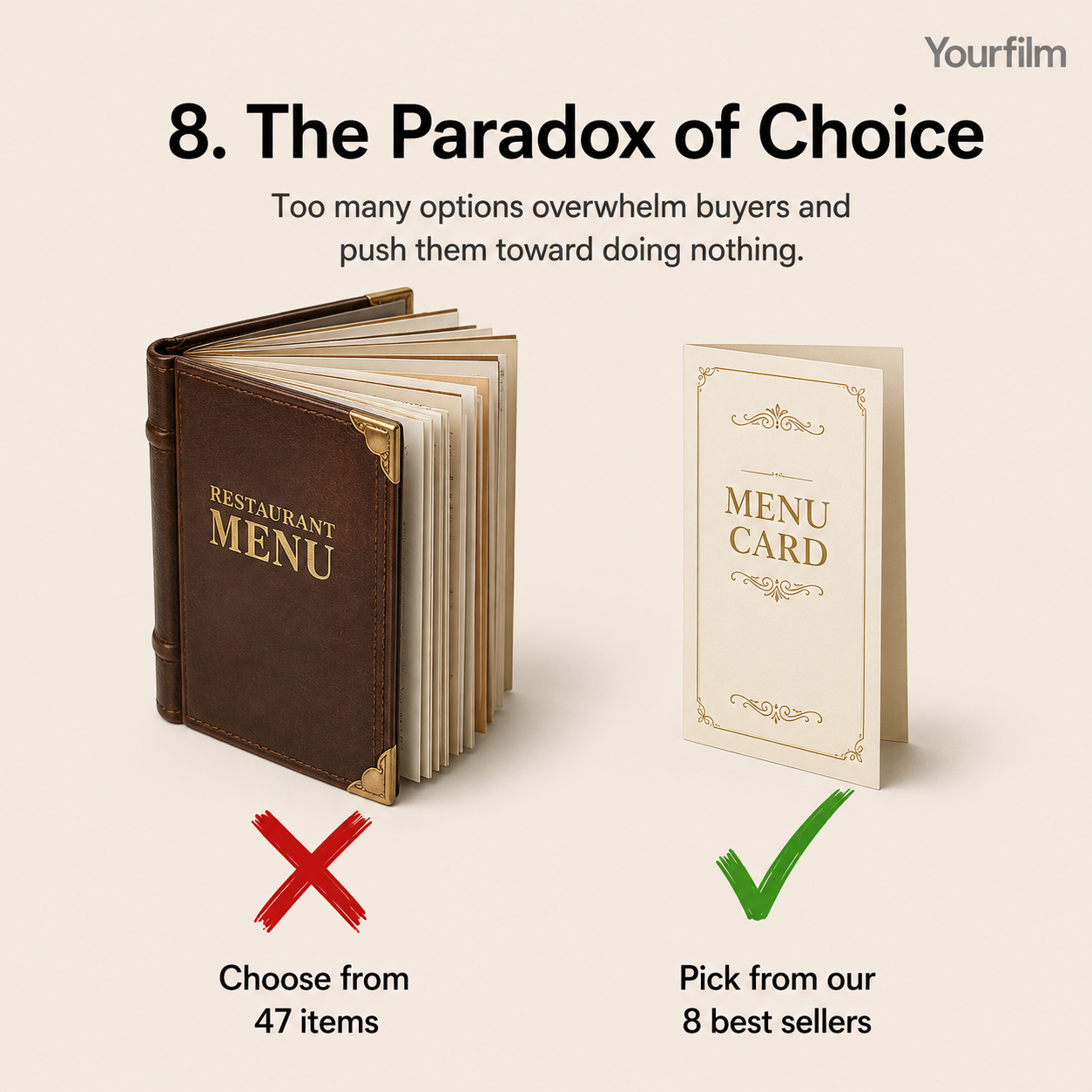
8. The Paradox of Choice
More choice doesn’t always lead to more sales.
In fact, giving customers too many options can create uncertainty and decision fatigue, leading them to choose nothing at all.
Restaurants often highlight their best sellers for this reason. Streaming services recommend content. Online retailers curate collections.
Helping customers narrow down their options can be far more effective than presenting everything at once.
Sometimes, less really is more.
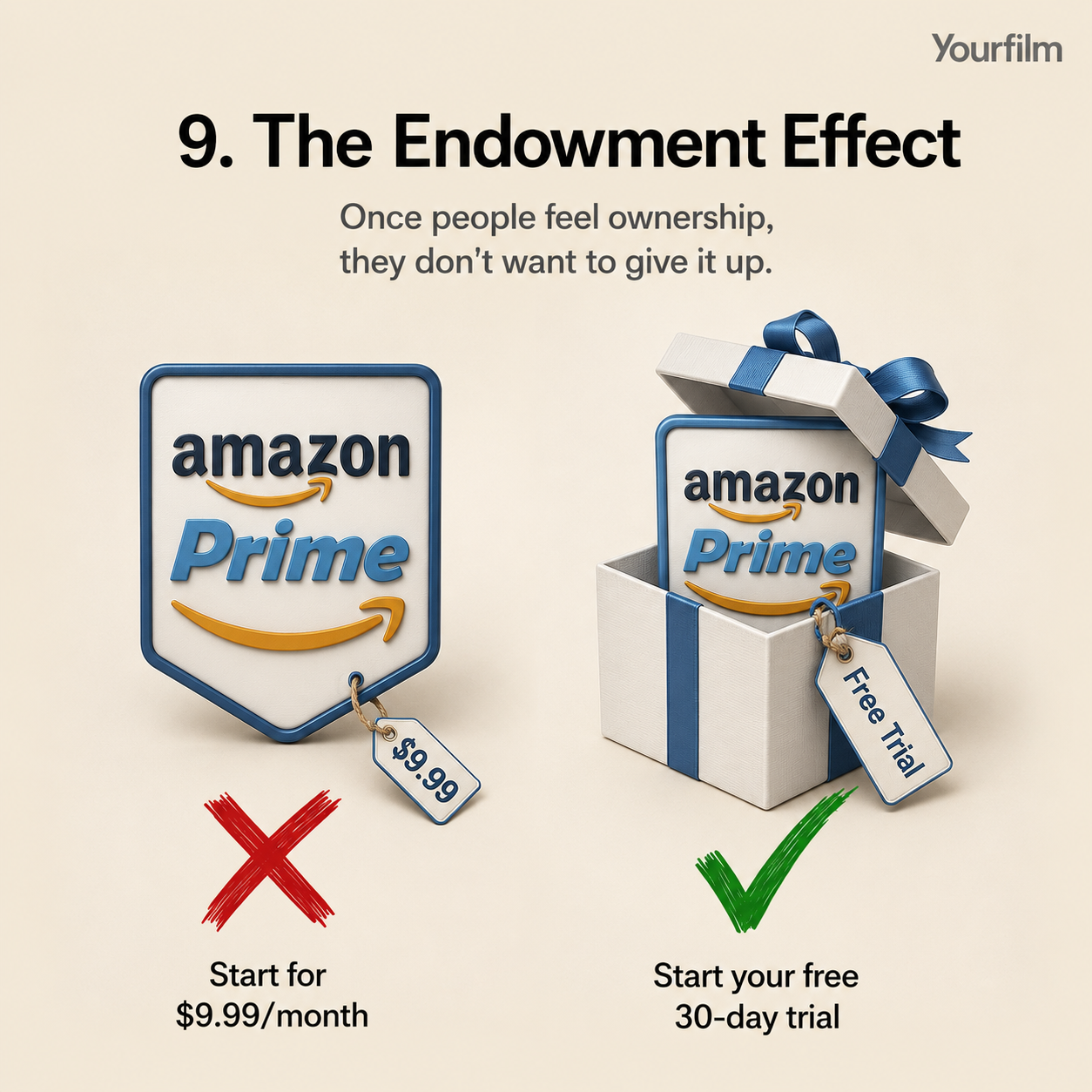
9. The Endowment Effect
People value things more highly once they feel they already own them.
That’s why free trials work so well.
Whether it’s a streaming service, software subscription or premium membership, allowing customers to experience the product first creates a sense of ownership. Once they’ve integrated it into their routine, giving it up becomes much harder.
Rather than asking customers to imagine the value, let them experience it for themselves.
The Key Takeaway
Marketing isn’t about manipulating people—it’s about understanding how people naturally make decisions.
These principles have been studied for years, and you’ll notice them everywhere once you start looking: from supermarket shelves and restaurant menus to pricing pages and subscription services.
Used thoughtfully, they can help businesses communicate more clearly, present their value more effectively and make it easier for customers to say yes.
We’re very fortunate to see these ideas in action every day across a wide range of industries. Hopefully, a few of them will prove useful in your own marketing too.