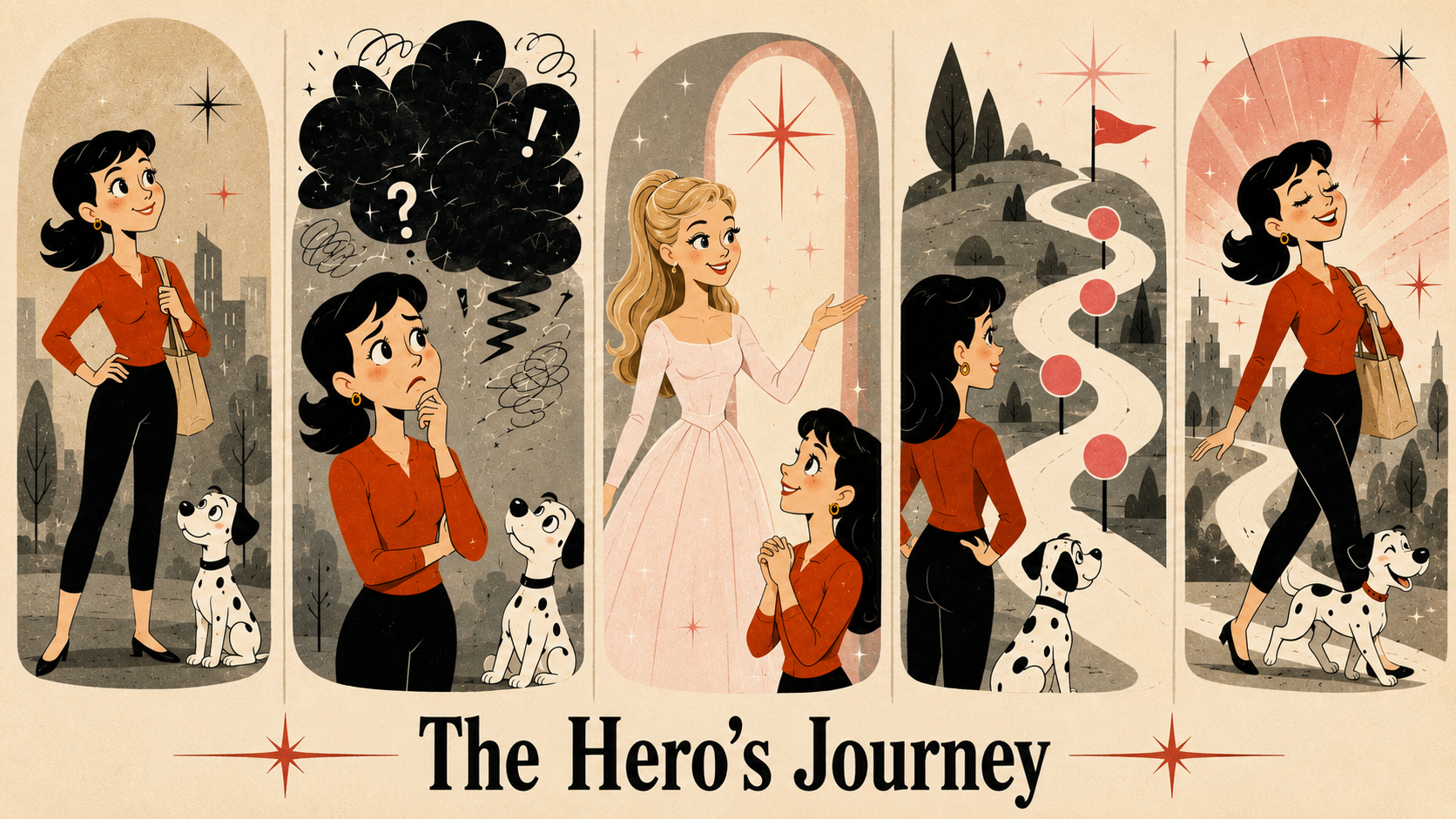
The hero's journey is one of the most compelling and widely used stories. Most movies and TV shows follow its format, and once you notice it, then it's hard to ignore.
The hero's journey is also apparent in everyday life.
In business the hero’s journey forms part of the customer journey. It’s important for businesses to understand that they are often NOT the main character in the hero’s journey.
Businesses that struggle to convert customers fail to realise they are not the protagonist in the story. They believe they are the hero and make the focus all about them and their products or services. The businesses which succeed are the ones who know their role in the story.
1. The Hero – Your Customer
Every great story starts with a hero.
Luke Skywalker. Harry Potter. Simba. Frodo.
They’re the characters we follow because they have a goal, a dream or a problem they need to overcome.
In business, the hero isn’t your company.
It’s your customer.
They’re trying to grow their business, buy their first home, find the perfect gift, organise an event or simply solve a problem that’s frustrating them. They already have a story before they ever discover your brand.
The moment you realise your customer is the hero, your marketing begins to change. Instead of asking, “How do we tell people how great we are?” you start asking, “How do we help our customer achieve what they want?”
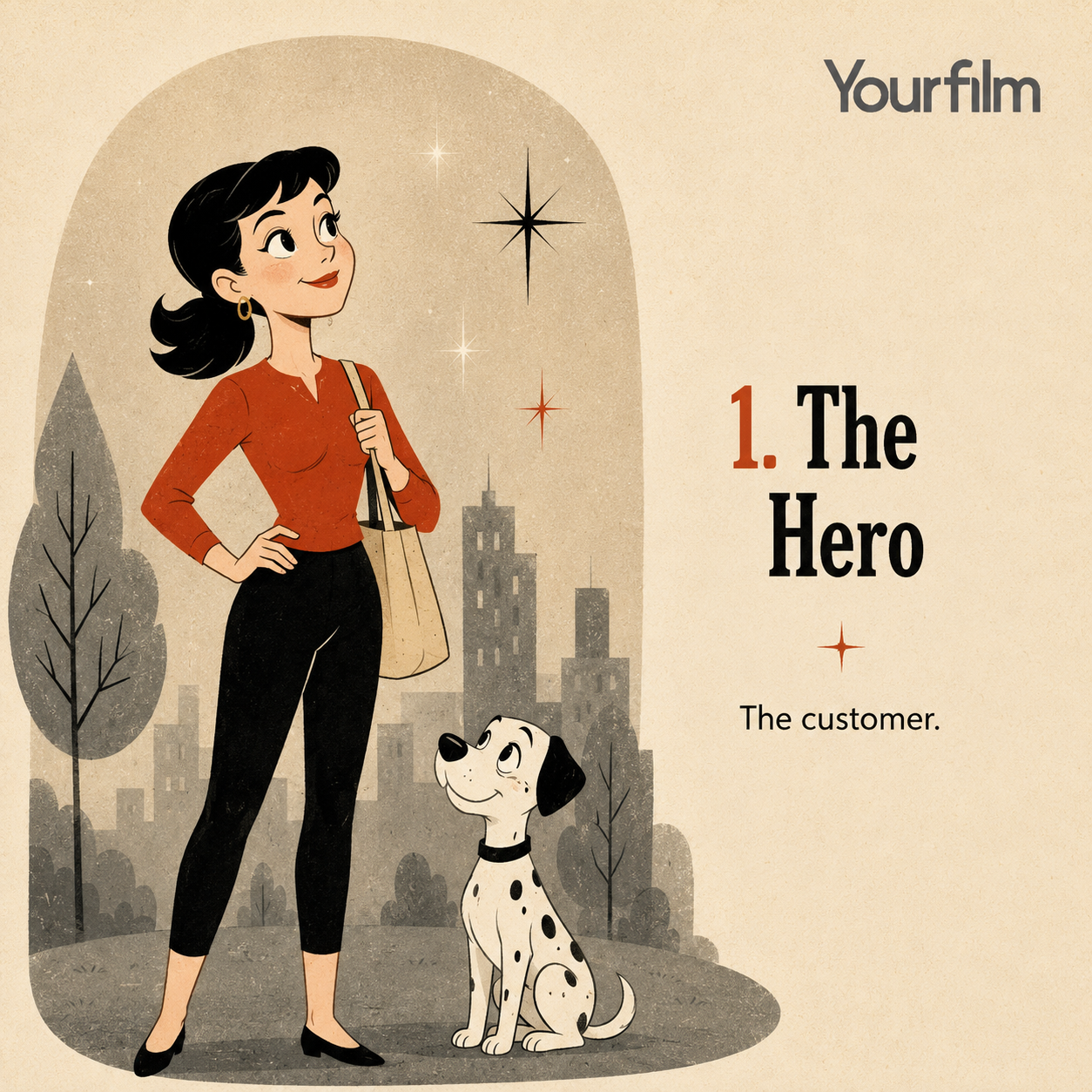
2. The Challenge – The Problem They’re Facing
Every hero encounters obstacles.
Without conflict, there’s no story.
Your customer may be overwhelmed, short on time, confused by too many options or worried about making the wrong decision. Whatever industry you’re in, your customers are already battling something before they arrive.
One of the biggest mistakes businesses make is talking about themselves instead of acknowledging the customer’s problem.
When your audience feels understood, they immediately become more receptive to your message.
People don’t buy products because they’re interesting.
They buy solutions because they’re needed.
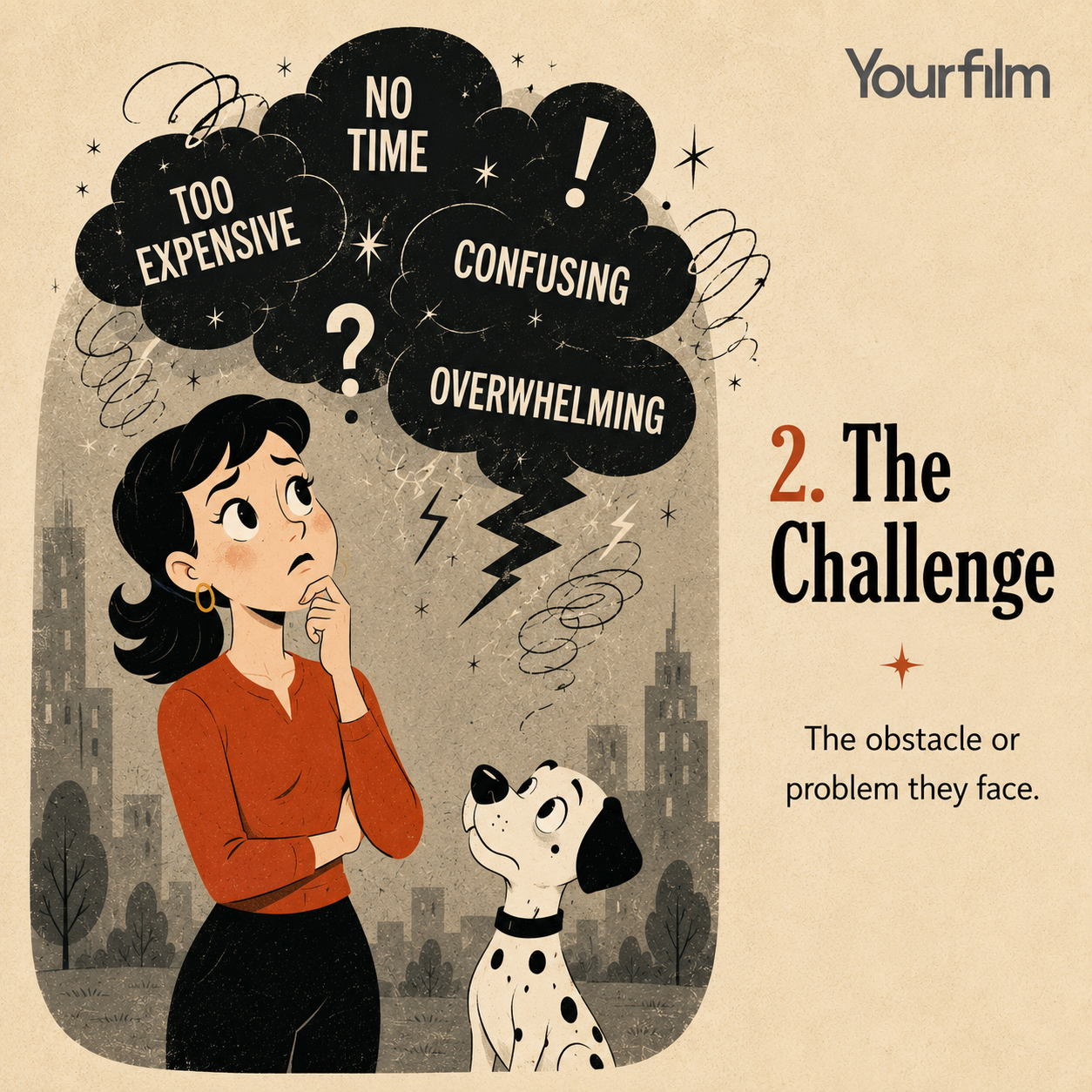
3. The Guide – That’s You
This is where many businesses get it wrong.
- You’re not Luke Skywalker. You’re Obi-Wan Kenobi.
- You’re not Harry Potter. You’re Dumbledore.
- You’re not Katniss Everdeen. You’re Haymitch.
The guide isn’t the centre of the story, but they’re often the reason the hero succeeds.
The guide provides experience, reassurance, wisdom and a clear path forward.
Great brands behave in exactly the same way.
Rather than shouting about how long they’ve been trading or how many awards they’ve won, they focus on helping customers feel confident about taking the next step.
A brilliant modern example is Amazon’s 2024 Christmas advert, Midnight Opus. The story isn’t really about Amazon at all. It follows a theatre janitor with an extraordinary singing voice whose colleagues secretly organise a performance to help him rediscover his passion. Amazon plays only a supporting role, delivering the tuxedo jacket that helps him step confidently onto the stage. The emotional payoff comes from watching the janitor fulfil his dream—not from watching a parcel arrive. Amazon understands that the customer is the hero; they’re simply the guide helping make that transformation possible.
That’s marketing done well.
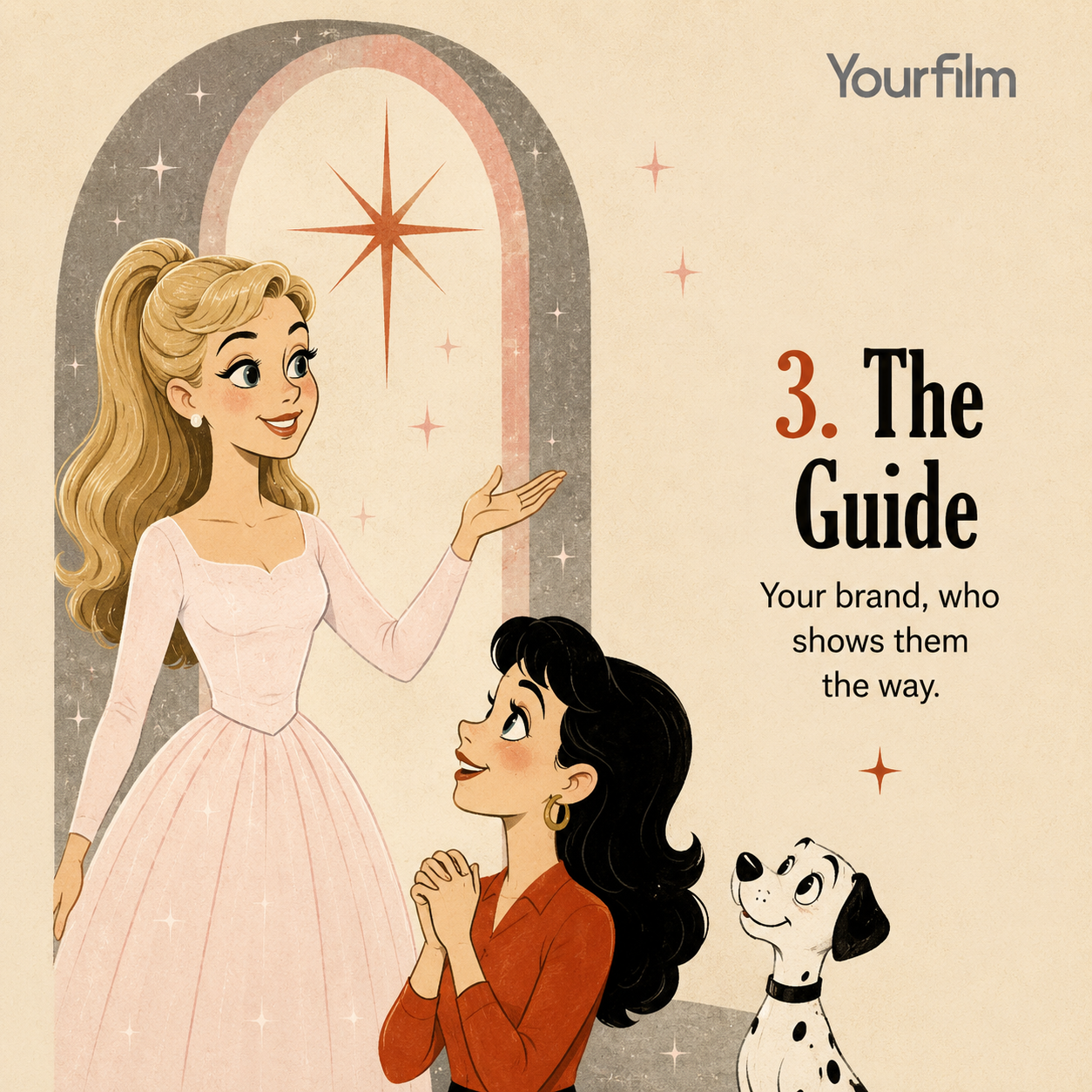
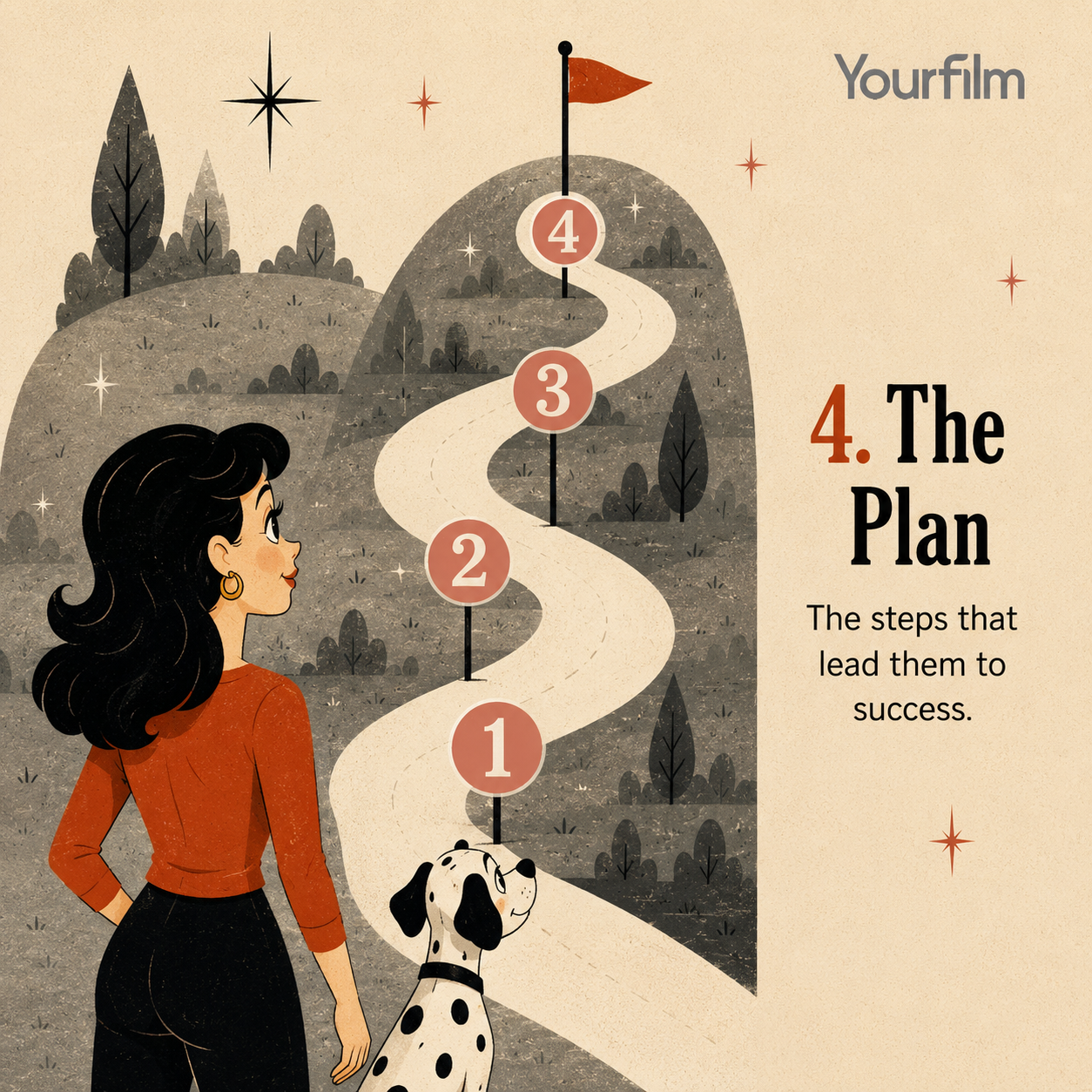
4. The Plan – Make Success Feel Achievable
Even heroes need a roadmap.
Imagine walking into a gym and being told, “Just get fit.”
It’s overwhelming.
Now imagine being told:
- Book your consultation.
- Receive your personalised plan.
- Start your first session.
- See your progress.
The journey suddenly feels achievable.
Customers want clarity.
Whether you’re selling professional services, software or video production, breaking your process into a few simple steps removes uncertainty and builds confidence.
A confused customer rarely buys.
A confident customer often does.
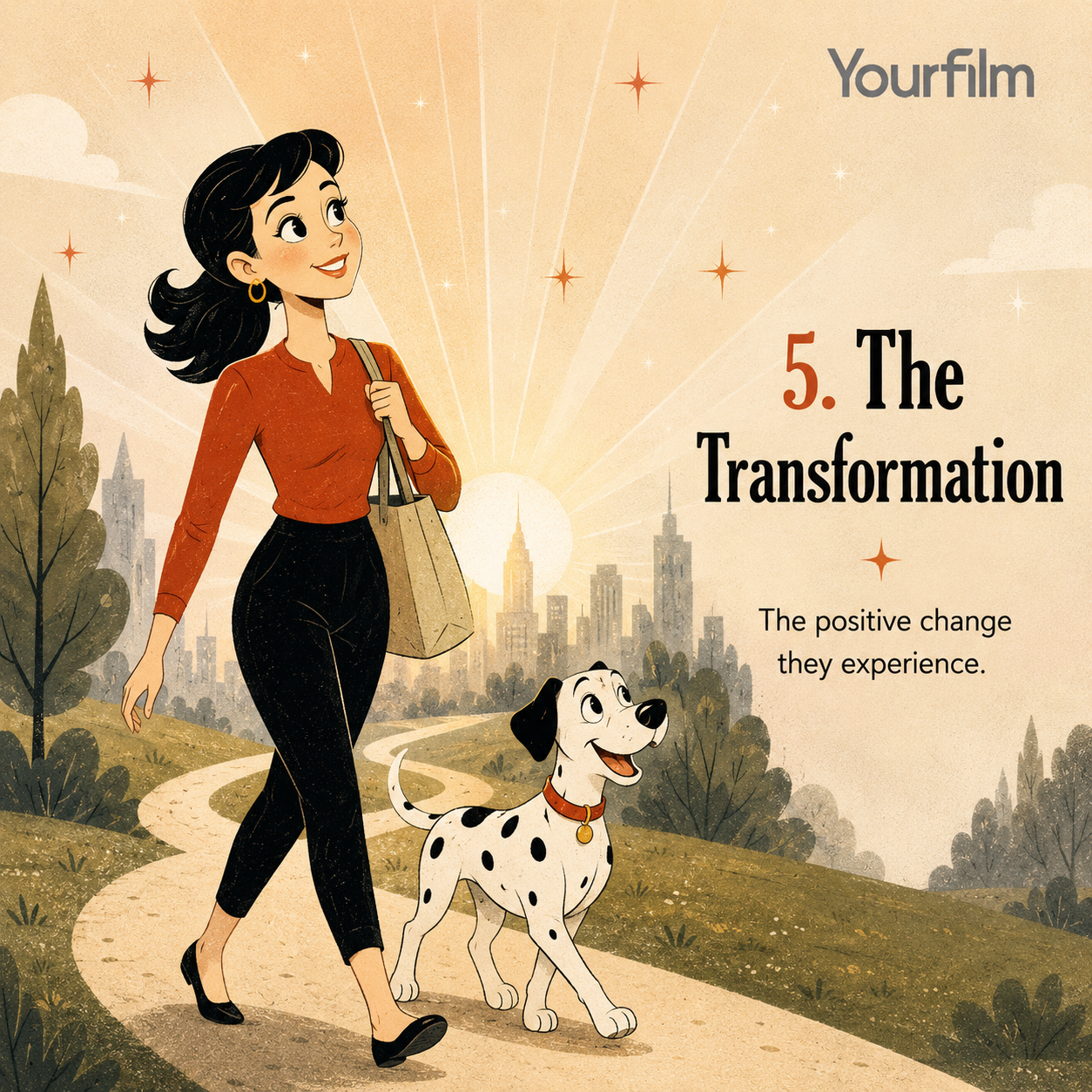
5. The Transformation – Sell the Ending, Not the Product
Customers rarely buy products.
They buy a better version of themselves.
Nobody buys a drill because they want a drill.
They buy it because they want a hole in the wall.
Nobody buys running shoes because they love rubber soles.
They buy the feeling of crossing the finish line.
Nobody hires a video production agency because they want a video.
They want more enquiries, stronger recruitment, increased sales, greater trust or a memorable launch.
Your product or service is simply the vehicle that gets them there.
The most successful brands don’t advertise features.
- They advertise outcomes.
- They sell confidence.
- They sell belonging.
- They sell happiness.
- They sell transformation.
When your customer can picture the better future your business helps create, your marketing becomes infinitely more powerful.
The Hero’s Journey – The Key Takeaway
The best marketing doesn’t make your business the centre of attention.
It makes your customer feel like the centre of attention.
Your job isn’t to be the hero.
It’s to understand the hero, empathise with their challenge, provide a clear plan and help them achieve the transformation they’re looking for.
Because when your customer wins…
Your business wins too.